Daylume
Trail Unit
Trail Unit
Couldn't load pickup availability
Self-paced learning overview
- 📥 Digital file available after purchase
- ♾️ Long-term availability
- 🔒 Secure checkout
- 🗓️ Content updated in 2026
1. Problem Statement
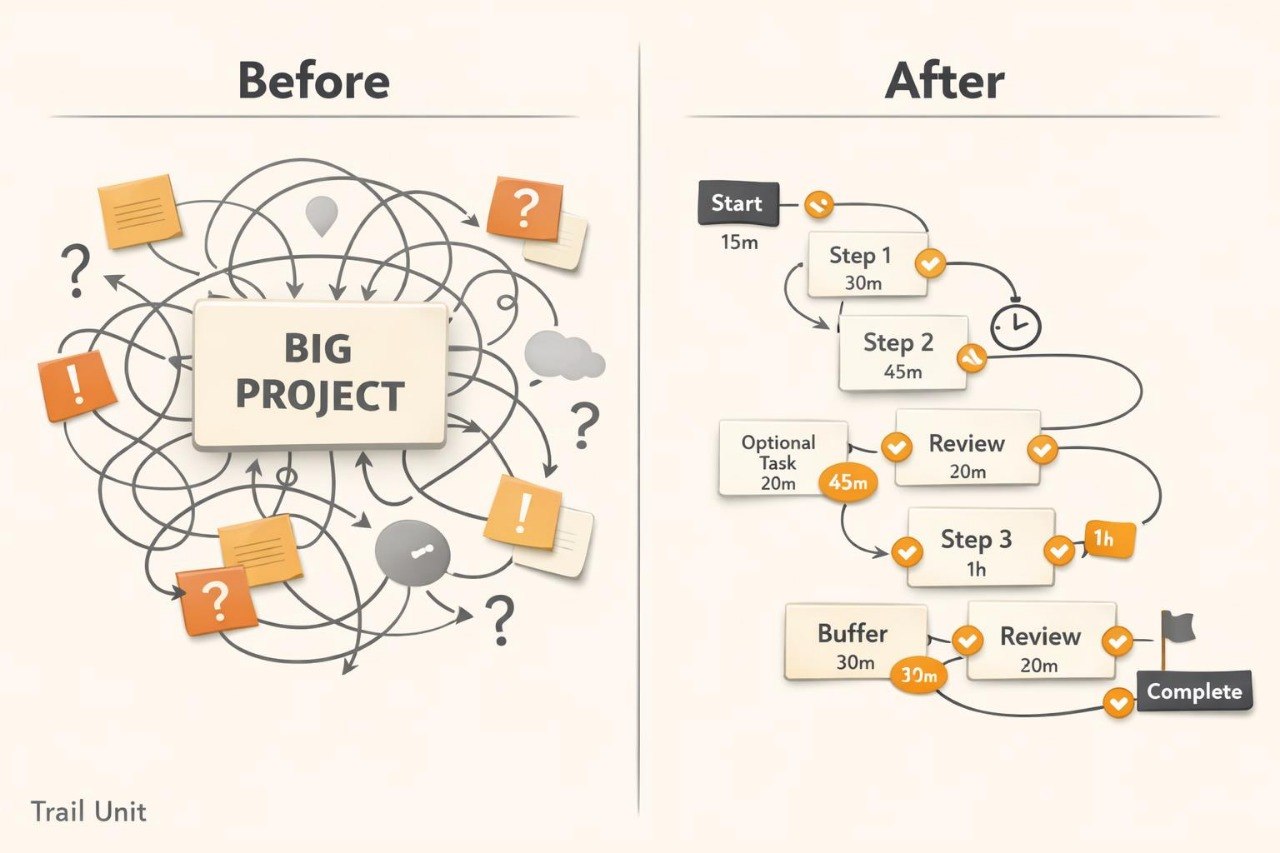
Struggling to complete tasks that contain several connected stages? You are not alone: one large item on a task list often fails to show where to begin, what should happen next, and which actions depend on earlier work. As a result, assignments may be postponed, individual steps may be missed, and completion dates may become difficult to estimate. Even a detailed weekly plan can lose its usefulness when it contains no checkpoints or flexible time. Trail Unit helps learners divide complex assignments into ordered parts and create a clear working route.
2. Solution
This course will teach you how to build a sequence of actions for personal, learning, and work-related assignments. You will explore how to identify a starting action, intermediate stages, dependencies, and a defined completion point. The materials explain how to distribute multi-step work across several days and review progress at suitable intervals. Practical activities guide you through creating time boundaries, flexible blocks, and brief review points. In the final module, you will prepare a complete route map for one real assignment or small project.
3. What’s Inside
Module 1: From Task to Trail
Divide a large assignment into separate actions and arrange them in a logical working order.
Module 2: Starting Points and End Points
Define a specific starting action, the intended result of each stage, and a clear completion point.
Module 3: Task Dependencies
Identify which actions can be completed at the same time and which require an earlier stage to be finished first.
Module 4: Time Estimates in Practice
Compare initial time estimates with actual completion times and prepare personal guidelines for future planning.
Module 5: Checkpoints and Reviews
Add brief reviews between stages to notice delays, schedule changes, and new circumstances before they affect the entire route.
Module 6: Flexible Route Planning
Reserve flexible working blocks and rearrange secondary activities without rebuilding the whole schedule.
Module 7: Your Weekly Trail Map
Create a one-week map containing stages, time blocks, dependencies, review points, and flexible space.
4. Who Is This For?
✅ Suitable if you:
- work with assignments containing several stages;
- postpone large tasks because the starting point is unclear;
- want to distribute work more thoughtfully across the week;
- regularly overlook intermediate actions;
- prefer to view the full task route on one page.
❌ May not suit you if you:
- need only a basic daily task list;
- do not plan to review your actual working time;
- expect individual schedule management;
- are not prepared to complete activities between modules.
5. What You’ll Learn
- divide one large assignment into at least five stages;
- define a clear starting and completion point;
- mark dependencies between connected actions;
- estimate the duration of individual stages;
- create at least three review checkpoints;
- include flexible time in a weekly plan;
- compare planned time with actual working time;
- prepare a complete route map for one assignment.
6. Refund Terms
A refund request for Trail Unit may be submitted within 30 calendar days of the order date. Each request is reviewed according to the store’s published terms, the relevant order information, and the amount of material already used. Before placing an order, learners should review the course structure, module list, and refund conditions.
7. Certificate
After completing all modules and preparing the final weekly route map, the learner may receive a digital Daylume certificate. The certificate includes the plan name and confirms completion of the included learning materials.
1. How does the learning process work?
1. How does the learning process work?
Each plan contains structured modules, written explanations, practical activities, and materials for independent study. Learners can work at their own pace and return to earlier sections while applying the methods.
2. How are the Daylume plans different?
2. How are the Daylume plans different?
The plans are arranged in ascending order according to the amount and depth of the included materials. Higher plans may contain additional modules, detailed exercises, planning templates, practical examples, and broader materials for developing personal productivity systems.
3. Is previous experience required?
3. Is previous experience required?
Previous experience is not required for the introductory plans. The materials begin with foundational time-planning principles, while more detailed topics are introduced gradually through everyday situations.
4. Is a certificate provided?
4. Is a certificate provided?
After completing the required modules and final activity, a learner may receive a digital Daylume certificate. It confirms that the learning materials included in the selected plan have been completed.
Share